

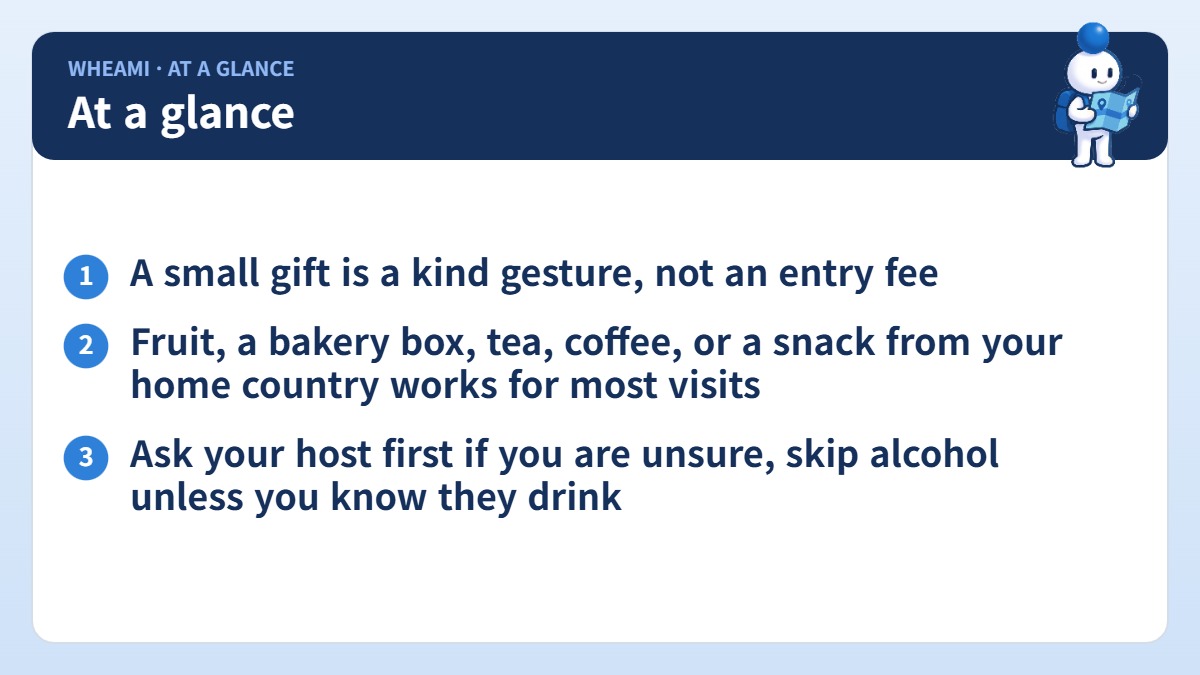
Quick answer: A small gift is a kind gesture, not an entry fee. Fruit, a bakery box, tea, coffee, or a snack from your home country works for most visits. Ask your host first if you are unsure, skip alcohol unless you know they drink, and follow the host’s lead on where to put your shoes, bags, and the gift.
Do you have to bring something?
No. Customs vary by generation, household, how formal the visit is, and your relationship with the host. Some households expect a small item and others truly do not mind. Think of a gift as a way to say thank you, not as a social fee. This guide covers the gift, the greeting, and the meal. Shoe removal has its own page in our shoes guide, so it gets only a short reminder here.
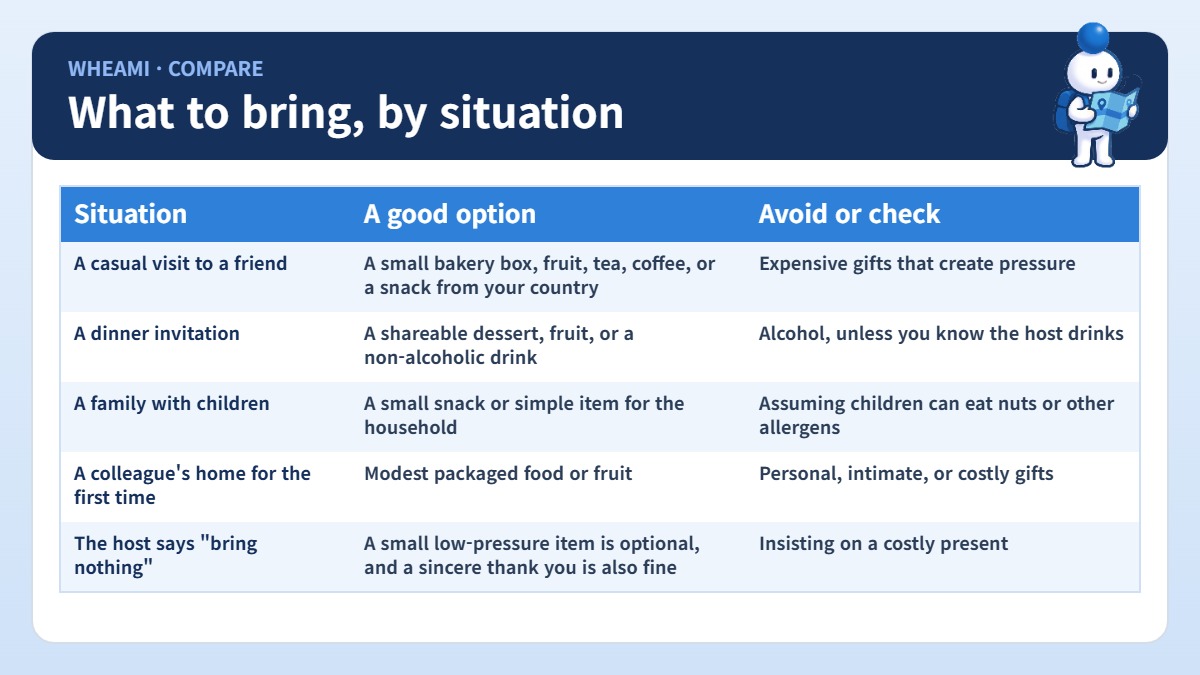
What to bring, by situation
| Situation | A good option | Avoid or check |
|---|---|---|
| A casual visit to a friend | A small bakery box, fruit, tea, coffee, or a snack from your country | Expensive gifts that create pressure |
| A dinner invitation | A shareable dessert, fruit, or a non-alcoholic drink | Alcohol, unless you know the host drinks |
| A family with children | A small snack or simple item for the household | Assuming children can eat nuts or other allergens |
| A colleague’s home for the first time | Modest packaged food or fruit | Personal, intimate, or costly gifts |
| The host says “bring nothing” | A small low-pressure item is optional, and a sincere thank you is also fine | Insisting on a costly present |
| Dietary needs unknown | A non-food item such as a tea towel or simple flowers, or ask beforehand | Strongly scented products or food with unclear ingredients |
The Official Travel Guide to Seoul describes general etiquette such as greeting politely and giving and receiving objects with both hands. That is guidance, not a checklist every household follows. Older newcomer guides and travel guides suggest fruit, chocolates, flowers, or bakery products, but they are background, not official protocol.
Local tip: If you are not sure, send a short message first: “Would it be okay if I bring dessert?” Choose a modest, shareable item rather than an expensive present.
Phrases that help
| Korean | Meaning |
|---|---|
| 초대해 주셔서 감사합니다 | Thank you for inviting me |
| 작은 선물이에요 | It is a small gift |
| 뭘 가져가면 좋을까요? | What would be good to bring? |
| 못 먹는 음식 있으세요? | Is there anything you cannot eat? |
| 정말 잘 먹었습니다 | Thank you, I enjoyed the meal |
| 초대해 주셔서 정말 감사했어요 | Thank you very much for having me |
Arrival and the meal
- Greet the host politely and follow their cue about shoes, coats, and bags.
- Hand over the gift. Using two hands is a nice touch if it feels natural, but you do not need to perform every detail.
- Expect the host to set the gift aside and open it later. That does not mean they dislike it.
- At the table, wait a moment and follow the host about when to start and how dishes are shared.
- Send a short thank-you message afterward. A sincere note is enough.
Local tip: Do not expect the gift to be opened in front of you. Putting it aside is normal.

Food, alcohol, and allergies
If you bring food from your country, include the packaging or the ingredient label when you can and mention common allergens. Skip alcohol unless you know the host drinks, since religious and personal preferences differ. For more on drinks, see our drinking culture guide.
What visitors report
Direct accounts of a full home visit are sparse, and most posts ask for advice before the visit.
- In January 2026 a foreign resident invited to a Korean landlord’s home asked whether to bring baked goods, fruit, tea, or ingredients. Replies named fruit as a common low-pressure choice and advised against giving money unless it is a special occasion or a close relationship.
- In early 2026 another poster asked what to bring when visiting someone’s home. Replies suggested fruit boxes, bakery items, or a modest household gift and stressed that there is no single required present.
- In October 2026 a foreign resident preparing to meet a partner’s family asked whether a gift was expected. Korean-language replies separated a casual friend visit from a more formal first family meeting and suggested a small everyday item or a snack from the visitor’s home country.
- In July 2024 a newcomer described a neighbor’s invitation after a brief introduction, and replies differed on whether it was ordinary friendliness or a reason for caution. It shows that the meaning of an invitation depends on context, not that home invitations are suspicious.

The local view
Fruit and bakery boxes are familiar shareable choices, but dietary needs, allergies, and alcohol preferences should guide you. Do not assume Koreans always bring fruit or that alcohol is never welcome. Keep the value modest, since a very expensive gift can make a host uncomfortable. The household context, such as floor sitting and shared food, is described in a Korea Herald explainer from August 2026.
Local tip: If the host says not to bring anything, a small thoughtful item is still welcome, but you can also simply thank them warmly. Do not bring something costly.
FAQ
Do I need to bring a gift?
No, but a small one is a considerate option.
Is fruit a good gift?
It is a common low-pressure choice. Check allergies first.
Should I bring alcohol?
Only if you know the host drinks.
Should I open my gift in front of the host?
You are the giver, so the host opens it. They may do so later.